Imagine a world where the depths of the ocean hold secrets from centuries past, yet to be discovered by modern civilization. This is not just a fantasy but a reality uncovered by an extraordinary team of French Navy divers and the esteemed DRASSM archaeological research institute. Together, they have documented a remarkable 16th-century trading vessel, resting at an unprecedented depth of 2,567 meters off the coast of Saint-Tropez. This groundbreaking find, tentatively named “Camarat 4,” shatters previous records in French underwater archaeology and stands among the most significant shipwrecks globally. But what makes this discovery so fascinating, and why is it important for future generations? Let’s dive deeper into the story behind this ancient maritime marvel.
The Depths of Discovery: An Unprecedented Archaeological Breakthrough
At the heart of this operation lies a vessel from the Renaissance era, measuring approximately 30 meters in length. Its discovery not only highlights the vibrant Mediterranean trade networks of the time but also showcases the potential of modern technology in uncovering the past. Such depth, previously unreachable, has provided scientists with an almost perfectly preserved snapshot of history, sparking excitement and curiosity within the archaeological community. Only the American destroyer USS Samuel B. Roberts has been documented at a greater depth, emphasizing the extraordinary scientific value of this new find.
Advanced Technology: Unlocking the Secrets of the Abyss
The success of this mission hinged on the use of state-of-the-art underwater technology designed to document the fragile archaeological site without causing damage. Remote-operated vehicles (ROVs) equipped with precise robotic arms navigated the abyssal depths, where 4K cameras and Lidar scanners captured every intricate detail. This technology allowed for a detailed three-dimensional mapping of the wreck and its surroundings, offering an unparalleled glimpse into the past.
Through photogrammetric surveys, virtual models of the shipwreck were created with exceptional precision, making them accessible to researchers worldwide. This digital archiving ensures that future generations can study the wreck, even if it remains on the ocean floor. The chosen approach prioritizes the targeted recovery of artifacts while protecting the broader archaeological context. What implications does this have for future underwater explorations?
A Natural Time Capsule: Preservation at Extreme Depths
The Mediterranean’s deep waters offer ideal preservation conditions that shallower regions cannot match. With minimal oxygen levels, low temperatures, and the absence of destructive currents, these depths act as a natural refrigerator. Remarkably, the absence of shipworms—organisms known for damaging wood—has allowed the vessel and its cargo to remain almost unchanged for centuries. This state of preservation is described by DRASSM experts as unparalleled in Mediterranean underwater archaeology. It’s as if time has stood still at the ocean’s bottom.
However, the discovery also raises modern concerns. Near the Renaissance treasure, remnants of contemporary civilization—plastic bottles, fishing nets, and soda cans—were found. This stark contrast between historical artifacts and modern waste serves as a poignant reminder of our responsibility to protect the last untouched marine regions. What challenges does this present for ocean conservation efforts?
Trade Networks Unveiled: Insights into Mediterranean Commerce
The artifacts recovered tell a story of complex trading relationships between Italy, Provence, and Catalonia. The research team documented several remarkable finds, including:
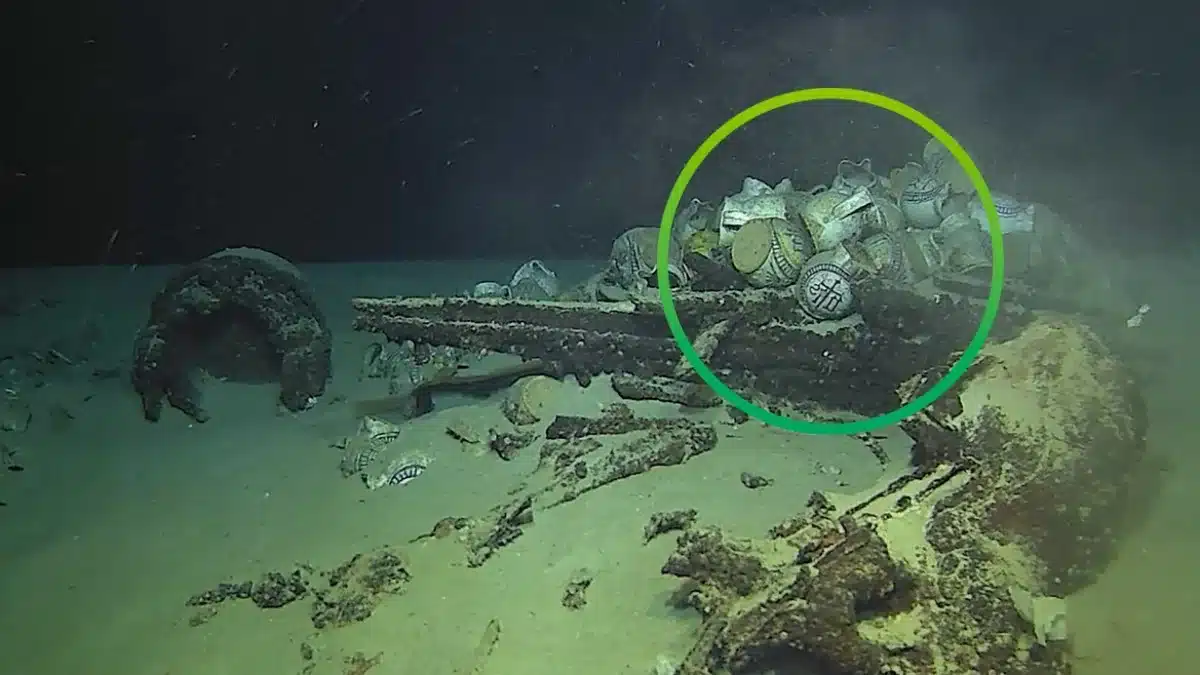
- Approximately 200 intricately decorated ceramic amphorae with floral motifs
- Strategically important iron bars wrapped in plant fibers
- A fully intact ship’s anchor
- An onboard cannon for defense against pirates
- Everyday crockery used by the crew members
The ceramic vessels, adorned with the “IHS” monogram and religious symbols, illustrate the deep interconnection between art, faith, and commerce in the 16th century. At the time, iron bars held strategic importance akin to modern raw materials, supplying shipyards, armament factories, and agricultural workshops along the Mediterranean coasts with essential resources. How do these findings alter our understanding of historical trade dynamics?
Balancing Preservation and Progress: A Future-Oriented Discovery
This discovery represents more than a technical triumph; it combines archaeological precision with ecological awareness for future generations. The strategy employed creates a balance between scientific research, educational outreach, and the preservation of maritime cultural heritage in the Mediterranean’s depths. As we continue to explore the unknowns of our oceans, how can we ensure that such discoveries lead to both cultural enrichment and environmental stewardship?
The Camarat 4 shipwreck not only expands our knowledge of Renaissance trade but also challenges us to consider the broader implications of underwater archaeology. It’s a testament to human curiosity and resilience, urging us to look beyond the surface and into the depths where history awaits. What other secrets lie in wait beneath the waves, and how will they shape our understanding of the past and future?